
Ambassador Jaime Victor Ledda’s Enduring Mission of Service

“Reflections on diplomacy, partnerships and his continuing commitment to Filipinos in Europe”

As he approaches the final bend of his diplomatic career, Ambassador Jaime Victor Ledda is far from thinking of retirement. His office at the Philippine-owned property in the heart of Brussels is in constant motion. His agenda is full, hopping from board meetings and official visits to community gatherings.
Ambassador Extraordinary and Plenipotentiary of the Republic of the Philippines to the Kingdom of Belgium, the Grand Duchy of Luxembourg, and the European Union (EU), Ambassador Ledda is very busy indeed.
A Career Shaped Across Continents
Time flies, he said. Juggling these three major assignments is both a challenge and a rewarding experience, especially amid an ever-changing geopolitical, economic, and migration landscape. His perspective is shaped by his previous foreign postings in Milan, Beijing, Macao SAR, as well as an earlier assignment in Brussels 25 years ago. From November 2013 to August 2020, he was the Philippine Ambassador to the Kingdom of the Netherlands and the Permanent Representative for the Prohibition of Chemical Weapons and other international organizations in The Hague.
On all three fronts, things have opened up for stronger and more sustainable partnerships. Stakeholders have also diversified: community, academe, social and private citizens, trade partners, and bilateral relations.
Strengthening Philippines-EU Ties
“For the European Union, our representation and visibility enabled us to avail of the GSP Plus privileges, the Partnership and Cooperation agreements signed and implemented for the creation of a formal bilateral mechanism for consultation and engagement,” he explained.
Last June, Ambassador Ledda organized a policy dialogue on the future of Philippines-EU economic cooperation with members of the diplomatic community, the business sector and academia. Held at the Brussels Press Club with Trade Undersecretary Allan B. Gepty as keynote speaker, this policy dialogue highlighted the “more comprehensive and vibrant economic linkages between the two partners,” especially in light of the ongoing free trade negotiations.
Recently, the Philippines and the EU announced their “Enhanced Partnership,” expanding political, security, and economic cooperation, including a landmark support package of €15 million to strengthen the Philippine Navy’s ability to monitor the country’s maritime zones, enhance early warning, and support better coordination and response by naval and maritime security forces.
Foreign Affairs Secretary Ma. Theresa P. Lazaro commented that expanding cooperation and heightened engagement reflect the growing partnership between the Philippines and the EU and signal that the time is ripe to elevate relations. In a statement released by the European External Action Service, the upgraded partnership “will expand cooperation on foreign affairs and security, good governance, the rule of law, human rights, climate change, the green transition, digital projects under the EU’s Global Gateway strategy and people-to-people exchanges.”
The Embassy played an active role in the whole-of-government effort to delist the Philippines from the EU’s Grey List, which monitors third-country efforts against money laundering and terrorist financing. “First Secretary Revillas and I met with senior officials in Brussels and Luxembourg, as well as Members of the European Parliament in Strasbourg, to inform them of the initiatives taken by the Philippine government to be more credible and transparent in our financial transactions and more compliant with the FATF standards. This helped pave the way for the country’s removal from the EU grey list.”
Growing Momentum with Luxembourg
This breakthrough was instrumental in enticing Luxembourg’s interest in doing business with the Philippines. More Luxembourg companies are investing in the Philippines, particularly in logistics, satellite services, financial services, and even healthcare. “We are keen to continue building this momentum, and with the successive visits this year of H.E. Xavier Bettel, Luxembourg’s Foreign Affairs and Foreign Trade Minister, we will further explore collaborations between the two countries.”
Over the last twenty years, the Filipino community in Luxembourg has also grown, now estimated at over a thousand, most of them employed in the finance sector as well as other sectors like information technology and healthcare. The Filipino community has gained recognition for their professionalism and work ethic.

A Growing Community in Belgium
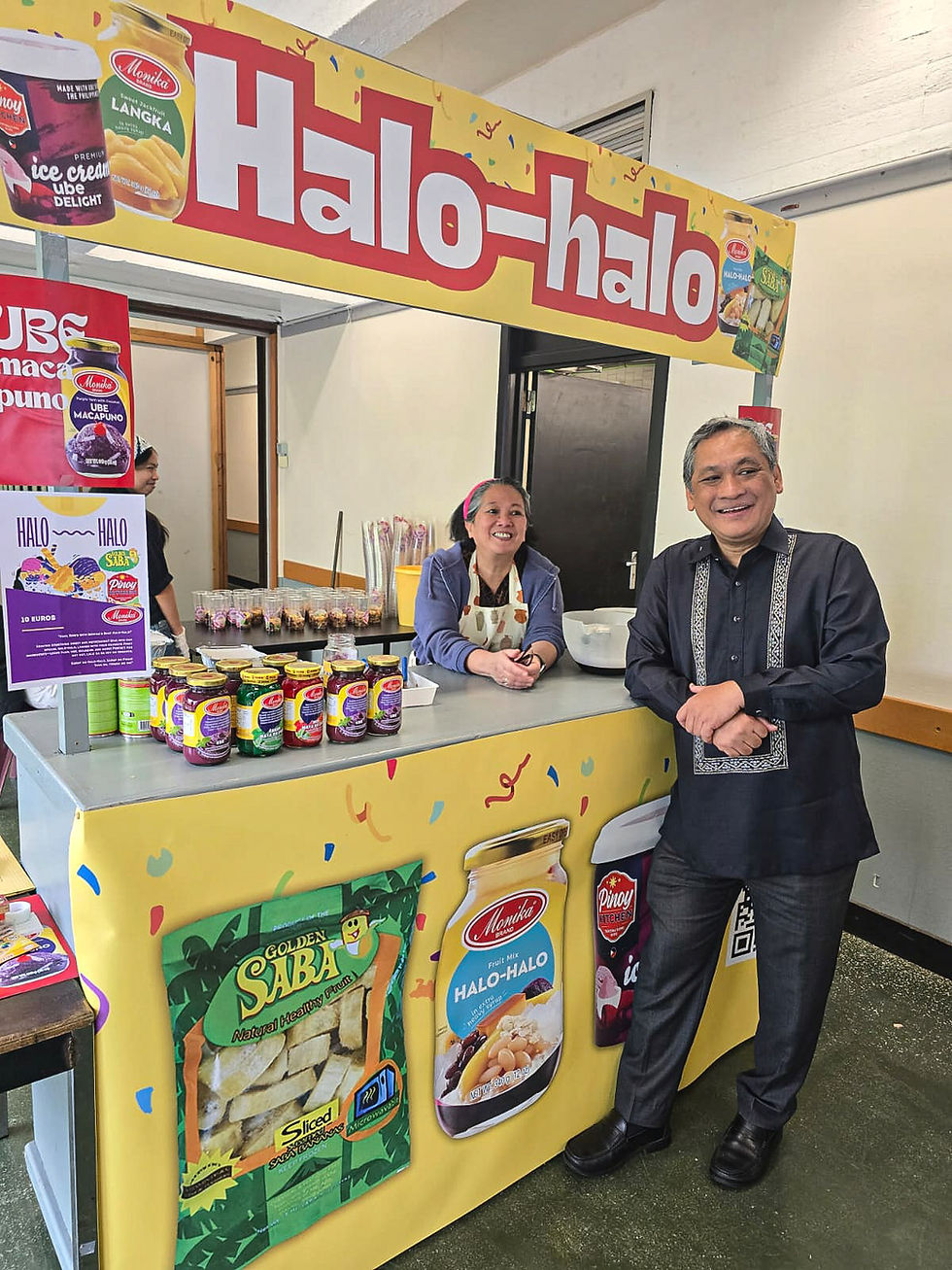
The same is true of the Filipino community in Belgium. Official numbers indicate approximately 18,000 Filipinos live in Belgium, with a majority in the Flanders and Brussels regions. Many are employed in the hospitality sector, but more Filipinos are being hired in geriatric facilities and factories. Truck drivers were hired directly from the Philippines or from third countries, while many professionals work in national companies, and some hold positions in government agencies.
Through the Belgian government's scholarship programs, many Filipino students have the chance to study at universities in Antwerp, Ghent, and Leuven. Ambassador Ledda pointed out that the University of Namur (UNamur) currently offers a Philippine Studies Program aimed at promoting a deeper understanding of the Philippines among Filipino and international students. The Ambassador and UNamur Rector Prof. Annick Casteaux signed a Philippine grant to implement the academic collaboration.
Marking 80 years of Philippines-Belgium Collaboration
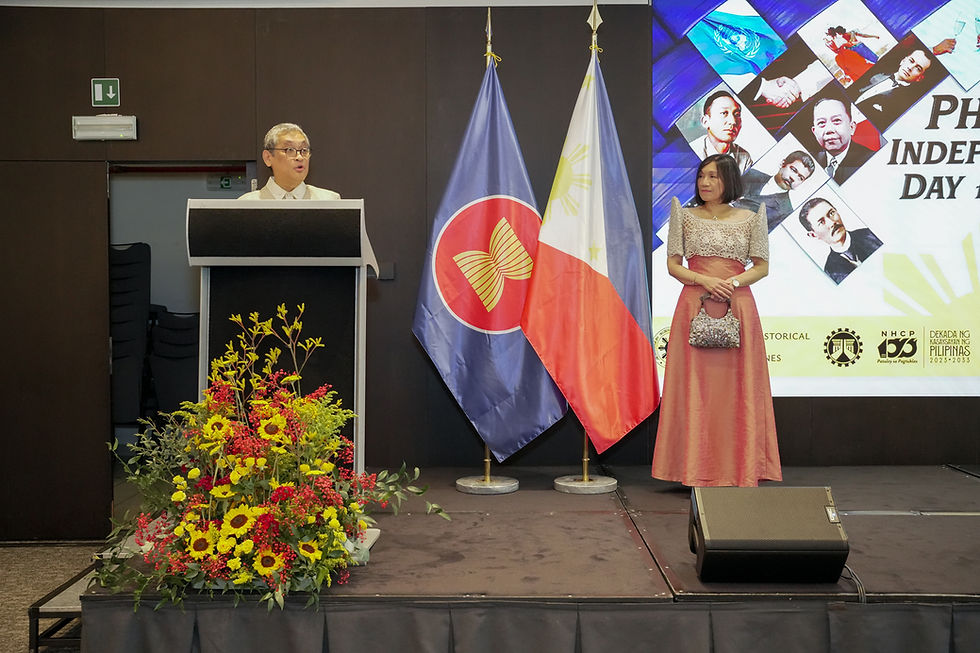
Such collaborations are grounded in commonalities and the long history linking the two countries. This year, 2026, marks the 80th anniversary of Philippines-Belgium diplomatic relations. During his recent visit to the Philippines, Belgian Deputy Prime Minister and Minister of Foreign Affairs Maxime Prévot met with Foreign Affairs Secretary Lazaro to explore ways to strengthen Philippines-Belgium cooperation further. Ambassador Ledda shared that they also “reviewed progress under the Joint Plan of Action (JPoA) 2023–2027 and discussed ongoing negotiations on bilateral agreements, as well as opportunities to expand cooperation in areas of mutual interest.”
Champion for Filipino Seafarers
The Belgian Foreign Minister also met with officials from the Maritime Industry Authority (MARINA) to advance shared priorities in maritime cooperation. This mutual interest is made evident by the adoption of the “Seafarer’s Human Rights, Safety and Well-being” declaration, collaboration with the Antwerp Maritime Academy for continuing education and training of Filipino seafarers, a partnership with Stella Maris Antwerp to support the well-being of seafarers, and exchanges between the Philippine Ports Authority and the Port of Antwerp-Brugge International.
The welfare of seafarers working aboard ships and tankers dropping anchor in Antwerp and other Belgian port cities is a key focus of the Embassy’s outreach program. With the help of Honorary Consul General Ronny de Blaere and the Filipino communities in Antwerp and Ghent, the Philippine Embassy has intervened and assisted Filipino seafarers facing cases ranging from possession of illicit substances to employment disputes.
Protecting the Vulnerable
The Philippine Embassy also addresses issues involving human trafficking and domestic violence. “Many of our ‘kababayans’ are lured into taking risks for the promise of a ‘better life.’ But some fall prey to financial and physical-social traps that leave them vulnerable to abuse. We also have cases of violence against women in intercultural marriages — Filipinas who marry without knowing much about their future partners or the country where they are moving.”
It is for this reason that the Philippine Embassy has been conducting post-arrival seminars that provide new arrivals with basic information on their rights, community activities where they can find help in case of emergencies, how to find work, and how to better integrate into Belgian society.
People-to-People Diplomacy
Indeed, “people-to-people” exchanges are one of the pillars of bilateral relations, said Ambassador Ledda. During the Philippine Independence Day celebration at the Embassy last June, the Filipino community warmly welcomed adoptees from the Philippines, who had reached out and expressed their desire to reconnect with their roots.
A significant part of the Embassy’s work involves providing consular services and assistance to nationals, participating in Filipino community activities and cultural projects, and identifying labor mobility opportunities for Filipino nationals. “We have been working for the recognition of the credentials of healthcare professionals and various occupations,” he said. He recalled that fifty years ago, Belgian hospitals recruited Filipino nurses.
Bridging Skills and Opportunities
“Today,” he said, “there is a higher demand due to shortages of healthcare professionals, both in hospitals and geriatric care homes. Of course, regulations and requirements remain before we can fully meet these demands. Still, this is being addressed through diploma accreditation, language training, and strengthening partnerships with healthcare institutions.” Nevertheless,
Ambassador Ledda has emphasized to Belgian companies that it would be more advantageous to set up in the Philippines, where they can more readily access a wide pool of Filipino professionals and skilled workers.
A Community That Integrates and Includes
The Ambassador said with pride that Filipinos have shown that they integrate easily, are cooperative, and are mindful of our place and role. “I remember the time when I met the mayor of Antwerp, who is now the Prime Minister; he claimed that he never had problems with the Filipino community. We are highly regarded as hard-working and conscientious. Our host governments have always expressed appreciation for our contributions to the local economy.”
Furthermore, the Ambassador explained that the Filipino sense of community is inclusive, meaning we don’t gather only among ourselves. We welcome others to partake of our culture, be it culinary, musical, socio-civic, among others. “We have become a bigger, visible and more active community.”
Over the years, the Filipino community has played a special role in cultural diplomacy, and the Embassy supports these initiatives. With these community events alongside consular services, representations and negotiations, Ambassador Ledda certainly has little time to rest. But he is grateful for his reliable and efficient Team Brussels PE, with each member entrusted with specific roles and responsibilities and understanding the importance of communication, whether through traditional channels or the wider reach of social media.
The Reward Of Service
When asked what the biggest reward in his diplomatic career has been, he quickly answered, “Our work is our reward. It is such an honor and privilege to be in service to our ‘kababayans’ and our nation.”
Honors and Distinguished Career
Too modest to mention it himself, Ambassador Ledda was conferred the distinct Knight Grand Cross of the Order of Orange-Nassau during his tenure as Ambassador to the Netherlands. He also received the Gawad Mabini, with the rank of Dakilang Kamanong, for his distinguished service in consular affairs.
His more than thirty-five years of government service also includes important portfolios. He was Assistant Secretary for Consular Affairs from April 2010 to November 2013. For three years (from the end of 2020 to early 2023), he was Assistant Secretary for European Affairs. He was designated as the Philippine representative to the ASEAN Inter-governmental Commission on Human Rights (AICHR) and the Philippine ASEM SOM Leader in a concurrent capacity.
A career diplomat and a lawyer, Ambassador Ledda, who earned both diplomas from the University of the Philippines, embraces his profession with fondness and calls upon the young to consider foreign service. “Diplomacy is an open profession, but one has to prepare for it… read, study, be curious, and keep up with current events. One can even develop a love for the arts or sports—subjects that can help break the ice in meetings or outside the boardroom.”
Looking Beyond the Final Bend
Never too late to learn the piano, he said in jest, but he is seriously considering life after the Department of Foreign Affairs. Family will definitely be the priority. Ambassador Ledda is married to Dr. Gina Macatangay, who holds a PhD in economics from Erasmus University in the Netherlands. “My wife Gina and son have, each time, adjusted to the changes and movements in my career, and it is time I devote my attention to them, as they so deserve.”
Through continuing education, he looks forward to engaging in private practice and consultancy. He’s currently pursuing a master’s degree in civil aviation and space law. Combining this with his extensive experience in Europe and an expanding network of contacts, life beyond that final bend of foreign service promises to be just as dynamic for Ambassador Ledda.


Comments