
Philippine Food Festival in Brussels

“Cultural diplomacy served on a plate”
If there is one easy and compelling way to promote the Philippines, it is through food. After all, we often say that the best way to a man’s—or woman’s—heart is through the stomach. Food is one of the borderless elements of culture. It transcends frontiers, often carried in the baggage of memory by those who have left the country. When exported, food also fascinates. With its blend of indigenous, Asian, and colonial influences, Filipino cuisine stirs curiosity among food lovers.
Food is the vehicle, but what it essentially carries is the connection among people from different regions, cultures, backgrounds, and generations. For potential tourists, it is a gateway of discovering a country.
Every shared meal becomes an invitation: join me at my table, taste our stories, and experience our way of life—a quiet and effective way of saying, “Come visit my country.” It is cultural diplomacy served on a plate. That is what the Brussels-based Philippine Art and Culture Exchange (PACE), a non-profit organization, seeks to achieve through its annual Philippine Food Festival.
Each year, crowds arrive early, long before opening time, and gradually fill the festival’s now-expanded grounds, which are provided free of charge by the city in the posh neighborhood of Woluwe-Saint-Pierre. Around 20 food stalls participate annually, offering a wide variety of home-cooked dishes that often represent the regions they come from, while always featuring Filipino favorites such as adobo, palabok, pancit, sisig, barbecue, and even dinuguan—which, surprisingly, many non-Filipinos are eager to try—along with a range of rice-based desserts and the much-awaited halo-halo.
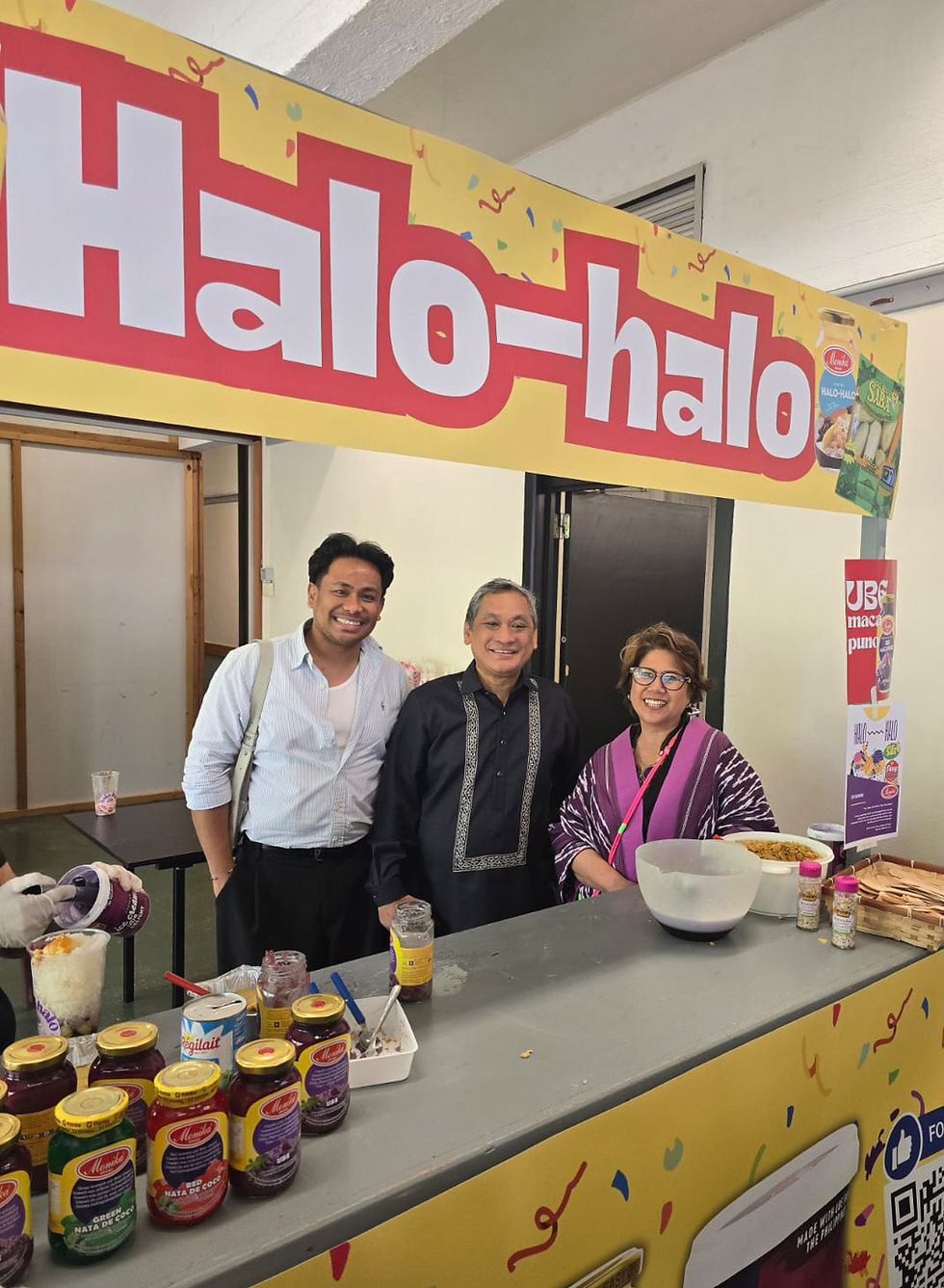
It is a day when Filipinos in the diaspora reconnect with food that reminds them of home while opening the doors for non-Filipinos to discover the country’s rich and diverse cuisine. Visitor statistics show that half of the attendees are non-Filipinos, many of whom return every year.
PACE’s Asher Serrana disclosed that the festival is now in its sixth year, with each edition showing continuous improvement not only in visitor turnout but, more importantly, in the quality of participating exhibitors, though he added that there is still much to learn.
PACE ensures that the festival remains a strong platform for promoting Philippine cuisine and supporting budding entrepreneurs. A month before the event, the organization conducts free hygiene and business workshops to raise awareness about local food sanitation regulations while also teaching the fundamentals of starting a business and identifying possible sources of financial assistance. For example, all stalls are required to provide Dutch and French translations of their menus and ingredients, as well as a list of allergens.
This year’s workshop was especially significant because the hygiene seminar was conducted by AFSCA, Belgium’s food safety authority, while the business workshop was facilitated by Brussels Finance, a key institution that supports and funds micro-enterprises in Brussels.
Nancy Marcelo, who books a stand at the festival every year, shared that her participation has helped enhance not only her cooking skills but also her ability to handle logistical challenges and manage stress effectively. She said she has learned valuable kitchen best practices through the experience.
Each year, her table is piled high with regional specialties from Bicol and Pampanga, which consistently sell out by the end of the day. Her participation has also taught her how to compute costs and pricing, identify which dishes sell well and which do not, and recognize the importance of promoting her business and festival participation through social media.
John Roque of B-Engine, a newly launched search engine and mapping platform for Filipino businesses in Europe, stated in a Facebook post that Filipino entrepreneurs in Belgium may not yet be highly visible in official statistics because they often operate in smaller, community-centered spaces—salons, restaurants, and neighborhood shops scattered quietly across the country. He added that although official numbers are still unavailable, the networks of these entrepreneurs, most of whom are women, are alive and active, “woven through social media groups, circles of friends, and cultural events like the Philippine Food Festival itself.”
“In these spaces, entrepreneurship becomes more than business. It becomes a way of building community, preserving identity, and carving out a sense of belonging far from home.”
Equally important is the role these festivals play in passing on culture to second-generation Filipinos. Adrien VJ is one of them and takes pride in promoting Philippine coffee from his Filipina mother’s hometown through a stand featuring coffee, chocolate, and salabat tea.
“Beyond showcasing the richness of Philippine cuisine and culture, and supporting Filipino entrepreneurs, it is a powerful gathering place for the whole community, particularly a way to inspire younger generations to reconnect with and keep our parents’ traditions alive,” he said.
Like many children who grew up in a biracial household, Adrien believes that these moments and spaces are essential in helping them preserve a connection to their roots. He also shared that this year’s Philippine Food Festival in Brussels once again confirmed its status as a must-attend event in Belgium. “It’s impossible not to feel delighted by such an incredible crowd and enthusiasm,” he said, while observing the long lines in front of the many stands.
The event was endorsed by the Philippine Embassy in Brussels and supported by Pinoy Kitchen, the marketing arm of Filipino products of Heuschen & Schrouff, a major importer in the Netherlands. Pinoy Kitchen carries its own brand of all-time favourites like hotdog and siopao but also Mama Sita, Fisher Farms, Monika, Golden Saba, Lucky Me,Argentina and many more, and has succeeded in bringing Filipino products into the mainstream marketplace. The Philippine Food Festival also featured a pop-up photo and art exhibit in collaboration with the Belikha Artists Group, as well as an arnis demonstration by PTK Brussels, much-welcomed additions to this year’s edition last April 19.


Comments